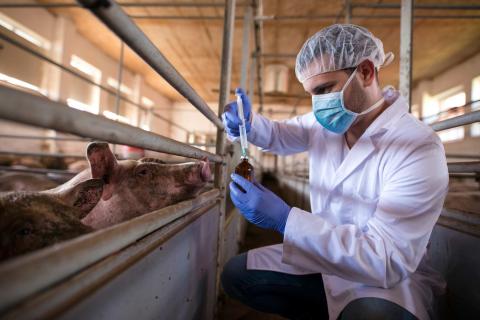
Spain detects two cases of African swine fever in two wild boars in Bellaterra (Barcelona)
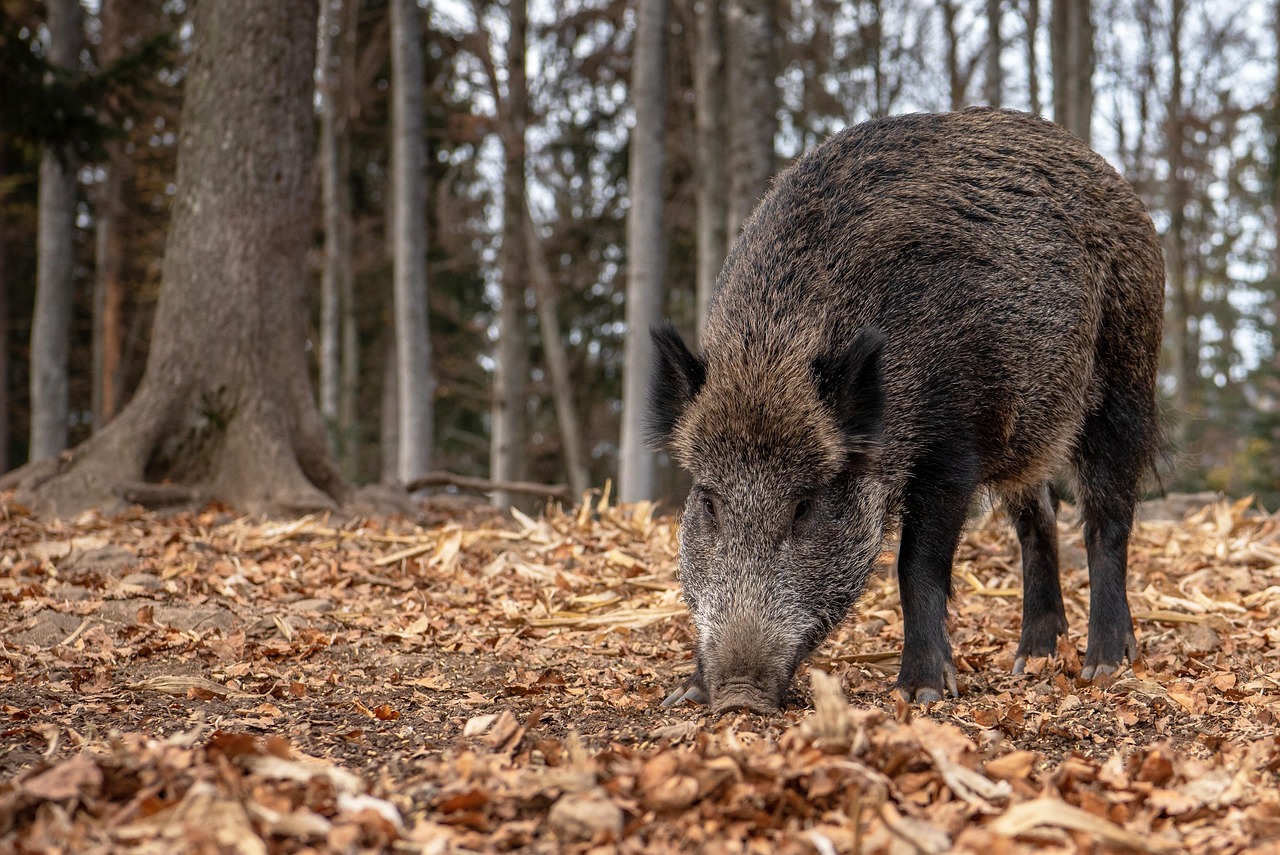
The veterinary services of the Catalan Regional Government have notified the Ministry of Agriculture, Fisheries, and Food of the detection of two wild boars positive for African swine fever virus in Bellaterra (Barcelona), where they were found dead on November 26. These cases represent the first detection of the disease in Spain since November 1994, according to the ministry in a press release. African swine fever is considered a Category A disease by the European Union, which means that member states must take measures to control and eradicate it as soon as possible. It is a non-zoonotic disease, meaning that humans are not susceptible to infection either through contact with animals or through the consumption of animal products.
Yolanda Revilla - peste porcina dos casos EN
Yolanda Revilla Novella
Head of the African Swine Fever Virus Laboratory at the Severo Ochoa Molecular Biology Center (CBMSO)
African swine fever virus (ASFV) is a double-stranded DNA cytoplasmic virus that causes severe disease in domestic pigs and wild boars. In 2007, the virus spread from East Africa (where it is endemic) to the Caucasus and Russia, and subsequently to several neighboring countries in Eastern Europe. Since then, the virus has spread and now affects more than 40 countries worldwide. In addition to Africa and Europe, it affects several regions of Asia, including China, the Dominican Republic, and Haiti, threatening the entire American continent and making ASFV the largest animal pandemic today.
The differences in virulence between ASFV strains range from 100% mortality in acute infection in virulent strains (such as the one currently circulating) to low or no mortality induced by attenuated strains. The molecular mechanisms that lead to ASF virulence are an important topic for shedding light on the pathogenesis of ASF and implementing vaccine development.
Efforts to control African swine fever involve the slaughter of millions of pigs each year worldwide, as there is no effective vaccine.
Spain is the third largest exporter of pork products in the world, as well as being the only producer of Iberian pork and its products. Economically, the presence of the virus in a given region results in very serious losses for the sector.
The virus is not a zoonosis, meaning it is not transmitted to humans or other animal species. It is exclusive to pigs and wild boars, as well as other related species, such as African wild pigs. Ticks of the genus Onnithodirus moubata and Ornithodoros erraticus are a vector of transmission, as the virus can spread through them.
Despite decades of research, and mainly due to the lack of efficacy of subunit/vectorized vaccines and/or inactivated virus or recombinant protein preparations, there is currently no commercial vaccine against ASF, although Spanish groups, especially the CBM of the CSIC, have recently tested vaccine prototypes in Asia with very promising results.
Christian Gortázar - peste porcina dos casos EN
Christian Gortázar
Professor of Animal Health at the Institute for Research in Game Resources (IREC) and head of the Health and Biotechnology Research Group (SaBio) at the University of Castilla-La Mancha
What are the implications of these two cases being confirmed?
"Firstly, we lose our status as a country free from African swine fever, which is a very serious matter because we have an extremely important pig industry that, among other things, generates around 300,000 direct and indirect jobs, many of them in rural areas, so the potential economic impact is extremely high. From there, we will have to see how we can manage the situation so that the social, economic, ecological, and other impacts are as minimal as possible.“
Can it spread to other species?
”African swine fever only affects suids, which means that in Spain only wild boars and, eventually, domestic pigs will be affected. Obviously, the situation is different if it remains confined to wild boars than if it also spreads to domestic pigs. I imagine that the regional veterinary services will now visit all the farms in the affected area and the risk area to ensure that the disease does not enter.
Biosecurity on pig farms will also be reinforced, and we hope that we will be as lucky as Sweden, for example, where there was no spread to domestic pigs.“
Is there a risk to humans?
”There is no risk to humans. It only affects pigs."
What precautions should be taken?
"The main thing right now is to take many precautions in the domestic pig sector, that is, to reinforce the biosecurity of farms as much as possible. Among the various biosecurity measures that exist, the most effective against the problem of African swine fever is fencing, ideally double fencing or fencing reinforced with cement walls, that is, fencing that is truly impervious to wild boars.
From there, action will also have to be taken on the wild boar population, and there are three necessary interventions when an outbreak has just occurred in the affected area, which is still very small at the moment. On the one hand, a major effort must be made to collect and dispose of the carcasses. These carcasses must be removed as soon as possible. The second issue is to reduce the wild boar population in the area, not so much in the infected area because that will be reduced by the effect of the virus, but in the surrounding areas, so that we avoid, as far as possible, having fertile ground for the spread of the virus.
Thirdly, the infected area must be fenced off, or fences must be erected in strategic locations, in strategic ecological corridors, which can facilitate the movement of wild boars from infected areas to uninfected areas. At the same time, of course, the movement of people in the infected area must be severely restricted, and right now any activity in the forest, not only hunting, but even mushroom picking or hiking, can interfere because it can cause the movement of wild boars, which is currently highly undesirable.“
Is there cause for alarm?
”I don't think we should be alarmed yet. The fact is that a couple of wild boars have been found in a relatively small area, a patch that is also more or less well defined. Let's see if all subsequent cases occur in the same area, in the same patch; that would be a good sign.
When cases spread to many other areas or to a wider geographical area, that's when we should be a little more concerned. But we have official veterinary services that are very well trained for these situations, who know perfectly well how to manage measures to control swine fever, and we are going to trust that, regardless of whether the problem spreads a little geographically, it will not spread excessively and, therefore, it will still be possible to deal with it as a one-off outbreak and not as an epidemic.